


Many homeowners can cut their energy use (and expense) by making the switch to an ENERGY STAR® certified HPWH when a standard water heater reaches the end of its life. This guide is designed to help you choose which heat pump water heater is the right option for you. But first, why switch?
1. https://www.energy.gov/energysaver/water-heating
2. https://www.energy.gov/energysaver/heat-pump-water-heaters
3. https://www.EnergyStar.gov/products/heat_pump_water_heaters/benefits-savings
Instead of directly heating water in the tank with a gas burner or electric heating element, a HPWH uses electricity to move existing heat from the surrounding air into the water storage tank. It’s similar to how a home heat pump system heats and cools your home, or how a refrigerator keeps your food cold. Here are more ways HPWHs are different from standard storage tank water heaters:
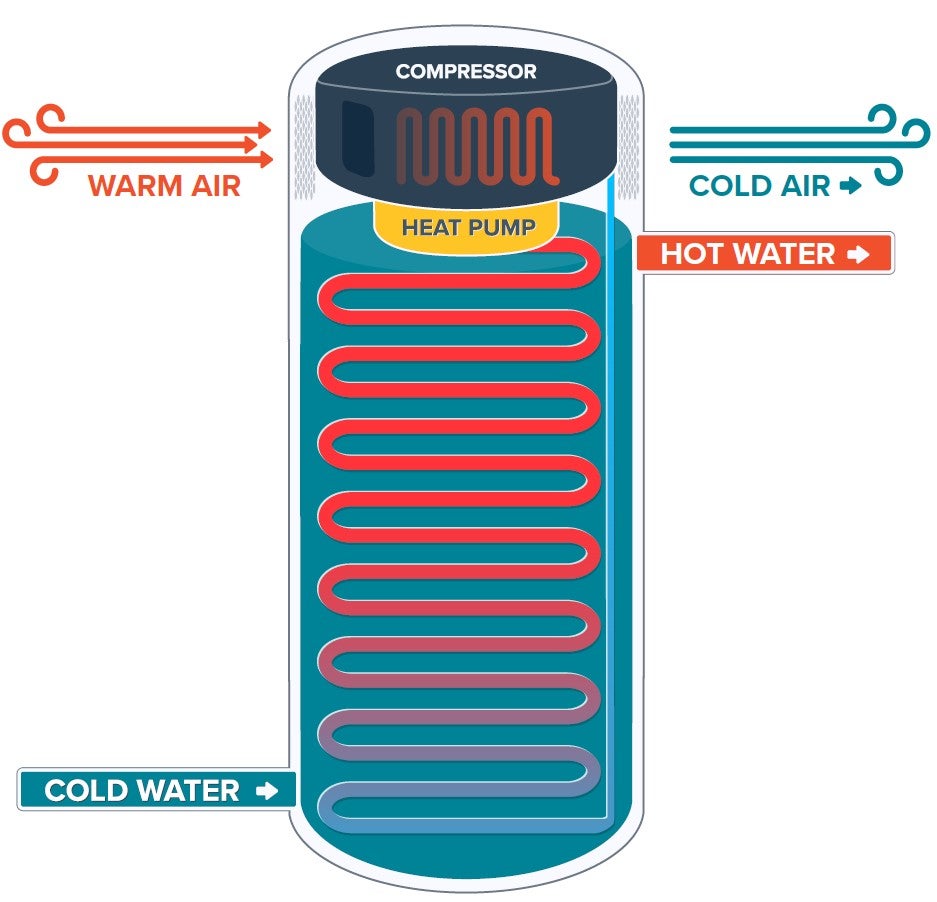
Choosing the right tank size is important because heat pump models take a little longer to reheat than standard tank water heaters. Many experts suggest "upsizing," or getting a tank that is slightly larger than the one you have now to make sure there is always enough hot water, even during peak demand.
General Size Guide:
HPWHs have different space needs than standard water heaters because they work differently. When choosing where to install a HPWH in your home, you have to consider physical space, ventilation and airflow, and drainage.
Most often, HPWHs can be installed where your old water heater was located. They’re often installed in a basement, because of the constant temperatures, adequate space, and access to drains for condensate. You can also install one in a garage (as long as it remains above freezing year-round), in a laundry or utility room, or in a closet with a ventilated door, as long as a drain is available.
Physical Space Needs
In addition to selecting the right water heater size, homeowners must also consider the physical space needed for a heat pump water heater. Compared to standard water heaters, heat pump water heaters are often taller, bulkier, and need more space for service access.
Ventilation and Airflow Needs for Heat Pump Water Heaters
Unlike natural gas, propane, or heating oil water heaters, HPWHs don’t need to exhaust combustion gases outside. However, they do need to be in a room at least 700 cubic feet in total volume, where the temperature stays above 40°F year-round.
If installing a HPWH in a space smaller than 700–1,000 cubic feet, the unit will need to be ducted, or extra ventilation will need to be added to the room. This helps prevent overcooling the room where the unit is installed. Always follow the manufacturer’s installation requirements for airflow and clearances.
Here’s how to measure the volume of a room in cubic feet:
1. Measure the floor (length and width).
Use a tape measure to find the distance between the two main walls on the floor. (If the room isn’t a rectangle or square, use the measurement from the shorter side to come up with a conservative number.)
2. Measure the ceiling (height).
Place your tape measure against a corner and measure the distance from the floor to the ceiling.
3. Multiply the three numbers.
To get the cubic feet (volume), multiply those three measurements together using this formula:
Length × Width × Height = Total Cubic Feet
Example: If your room is 10 feet long, 10 feet wide, and 8 feet high:
10-foot length x 10-foot width = 100 square feet
100 square feet x 8-foot height = 800 cubic feet
Condensate Drainage Options for Heat Pump Water Heaters
Condensate (water) must be safely drained away from the unit. Common options include:
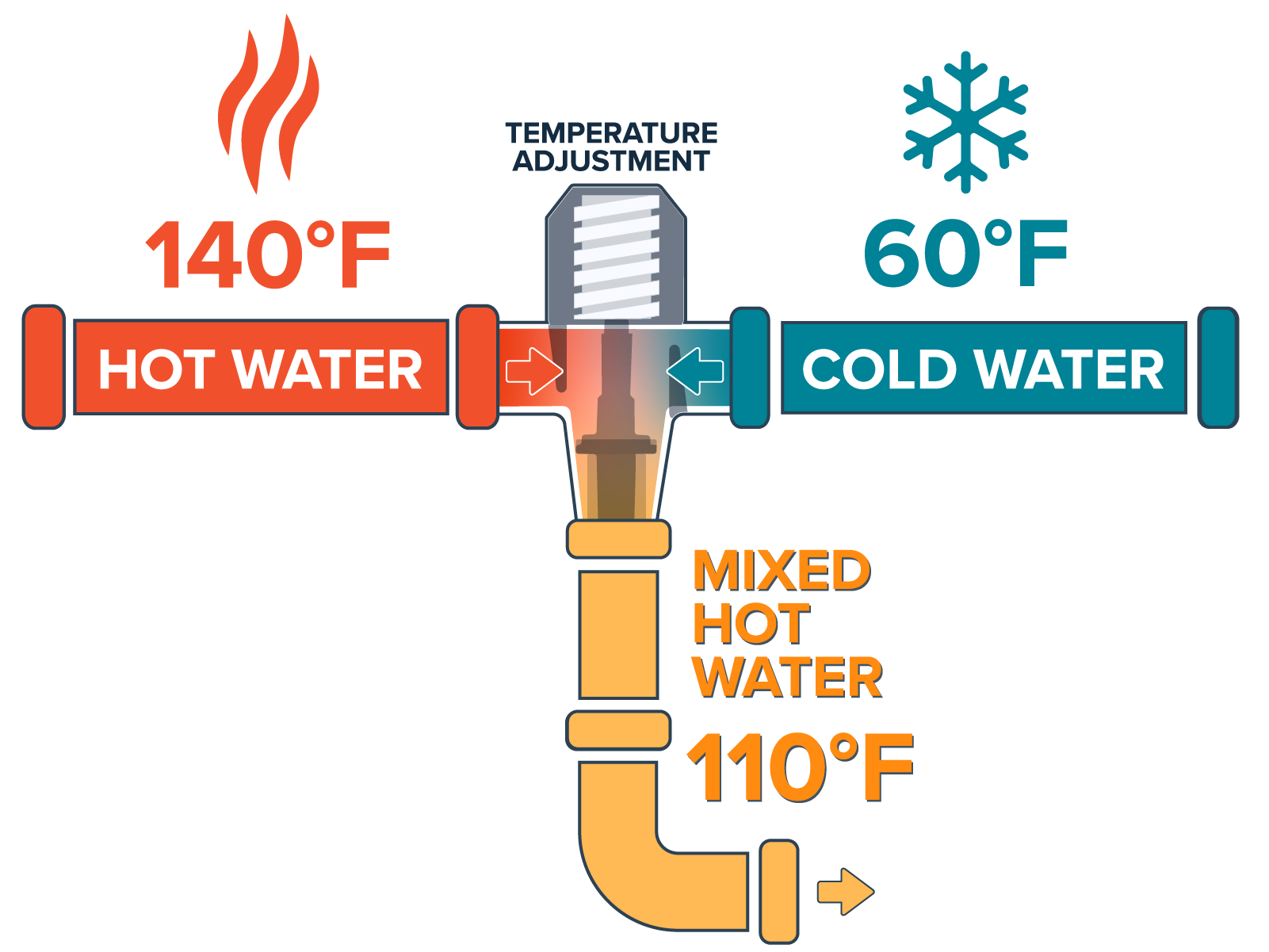
Does your family use more hot water than average, or use a lot at the same time? Most heat pump water heaters for home installation are "all-in-one" or hybrid systems. They come with a built-in electric heating element as a backup to the heat pump system. Even during times of peak demand, such as when someone is showering while the washing machine is running, there should be enough hot water.
Here are three options for boosting the amount of hot water available during intense demand. The best choice for you depends on the number of people in your home, the size of your home, and how your family uses hot water.
For most homes, a heat pump water heater is a high-tech way to save energy for years to come. By picking the right size and making sure the unit has enough airflow and proper drainage, you can enjoy reliable hot water and a lower energy bill.
If your standard tank water heater is near the end of its useful life, it may be wise to consider replacing it with a HPWH. For most homes — especially those with basements — heat pump water heaters are a highly efficient and future-ready water heating option.
ENERGY STAR and the ENERGY STAR mark are registered trademarks owned by the U.S. Environmental Protection Agency.
Disclaimer: This guide is intended for consumer education and planning purposes. Always consult manufacturer installation instructions and local building codes when selecting and installing a heat pump water heater.
© 2026, AM Conservation Inc., All Rights Reserved.


